
When the people received the Torah
Shavuot (Hebrew שָׁבוּעוֹת, “weeks”) is observed on the 6th of Sivan, the fiftieth day after Passover. Its name comes from the seven weeks of counting the Omer, which bind the Exodus from Egypt to the giving of the Torah.
On this day, by tradition, the people received the Torah at Mount Sinai — amid thunder, lightning and fire. It is not only the memory of an event: each year Shavuot is lived as a renewed acceptance of the Torah.
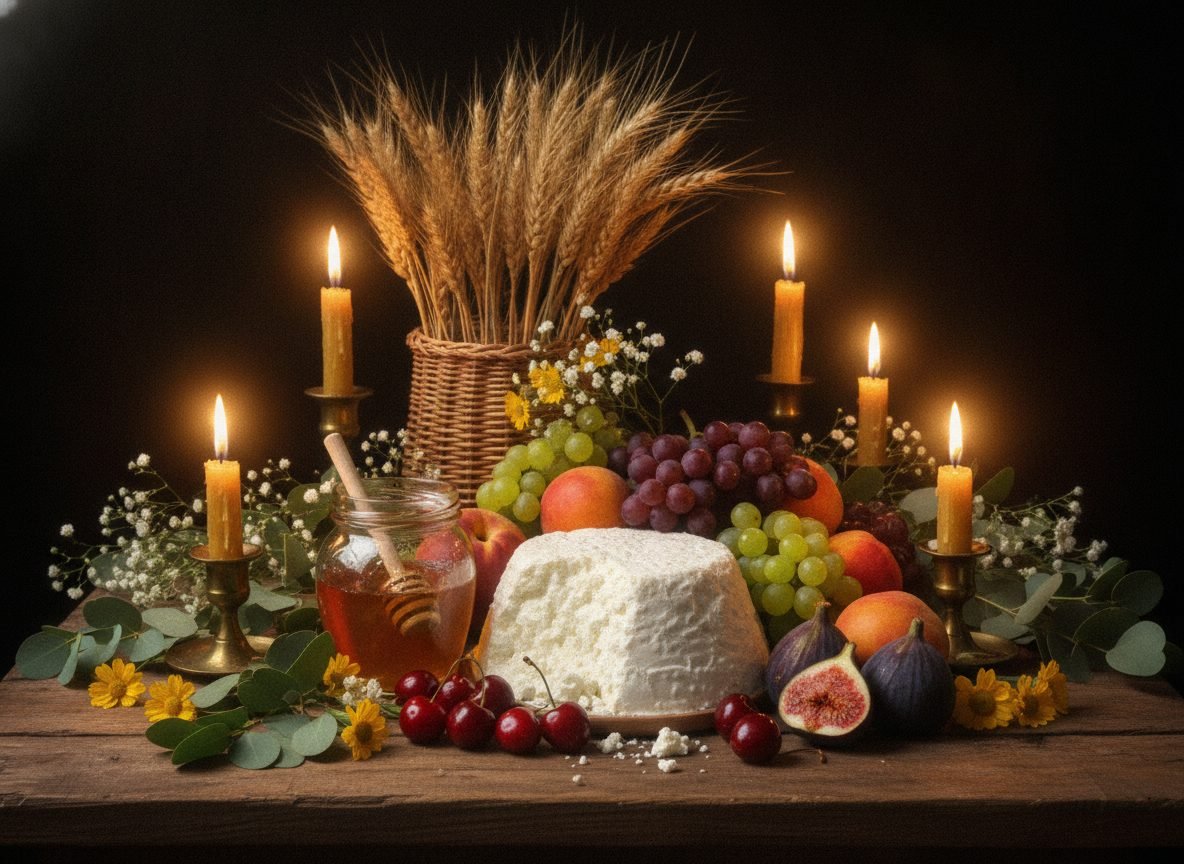
Shavuot is also a festival of harvest and first fruits. So to the awe of Sinai are added greenery and flowers, milk and honey: the gift of the Torah and the gift of the land meet at one table.
Shavuot in Azerbaijan
Azerbaijan is home to one of the world's oldest Jewish communities and a long tradition of interfaith tolerance. On Shavuot the synagogues of Baku and Quba are decorated with greenery, the Torah and the Book of Ruth are read, and tables are set with dairy.
A special place belongs to Krasnaya Sloboda (Qırmızı Qəsəbə) near Quba — one of the few places in the world where Mountain Jews live compactly. There Shavuot is met by the whole community, with night-long study, ancient Juhuri melodies and its own festive dishes.

Enter the festival
Three sides of Shavuot — the revelation at Sinai, the Torah and its customs, the festive dairy table.



Na'aseh v'nishma
“We will do and we will hear” — the people accepted the Torah with all their heart, before they even knew it.
The festival in numbers
Shavuot falls on the 6th of Sivan (6–7 outside the Land of Israel) and closes the counting of the Omer. In the Gregorian calendar, usually late May or early June.